
Rogers: For the First Time in 40 years, We’ve Been Presented a Budget that Accounts for the True Cost of American Deterrence
Washington, D.C.,
April 29, 2026
"We don’t have nearly enough munitions, ships, aircraft, or autonomous systems to ensure dominance against every adversary," Rogers said. "Our Defense Industrial Base, long the envy of the world, has atrophied significantly. We are no longer capable of manufacturing for our warfighters at scale or speed."
"Fortunately, that’s about to change. The President has requested a historic $1.5 trillion budget for our national defense. For the first time in 40 years, we’ve been presented a budget that accounts for the true cost of American deterrence."
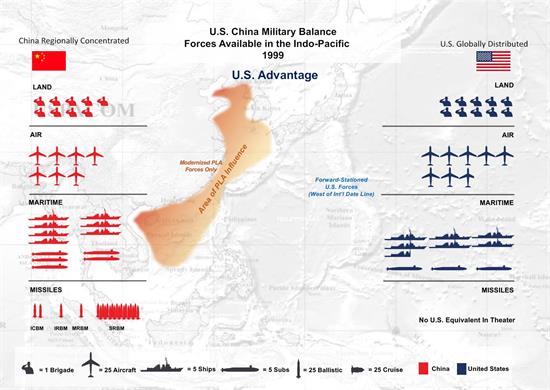
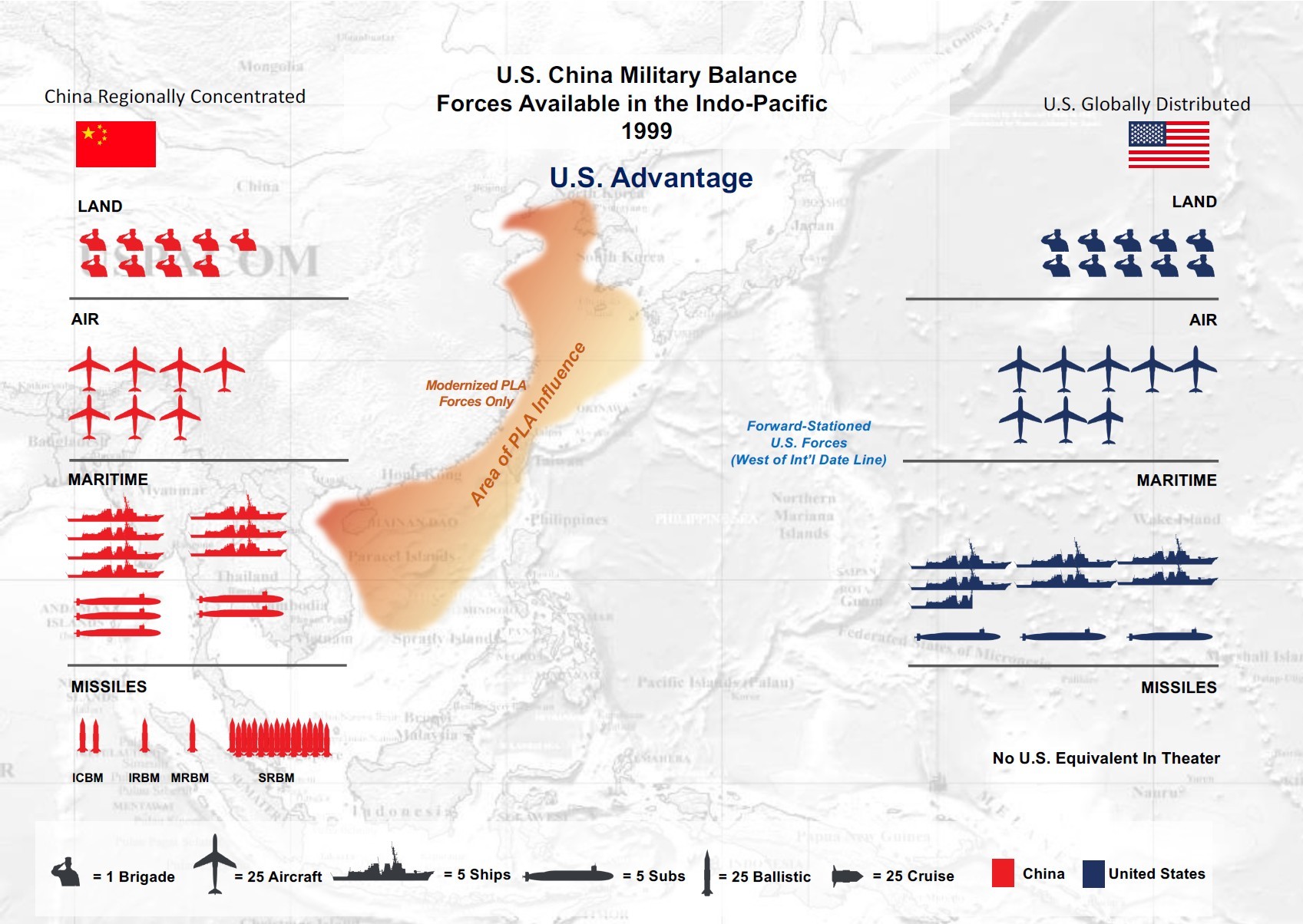
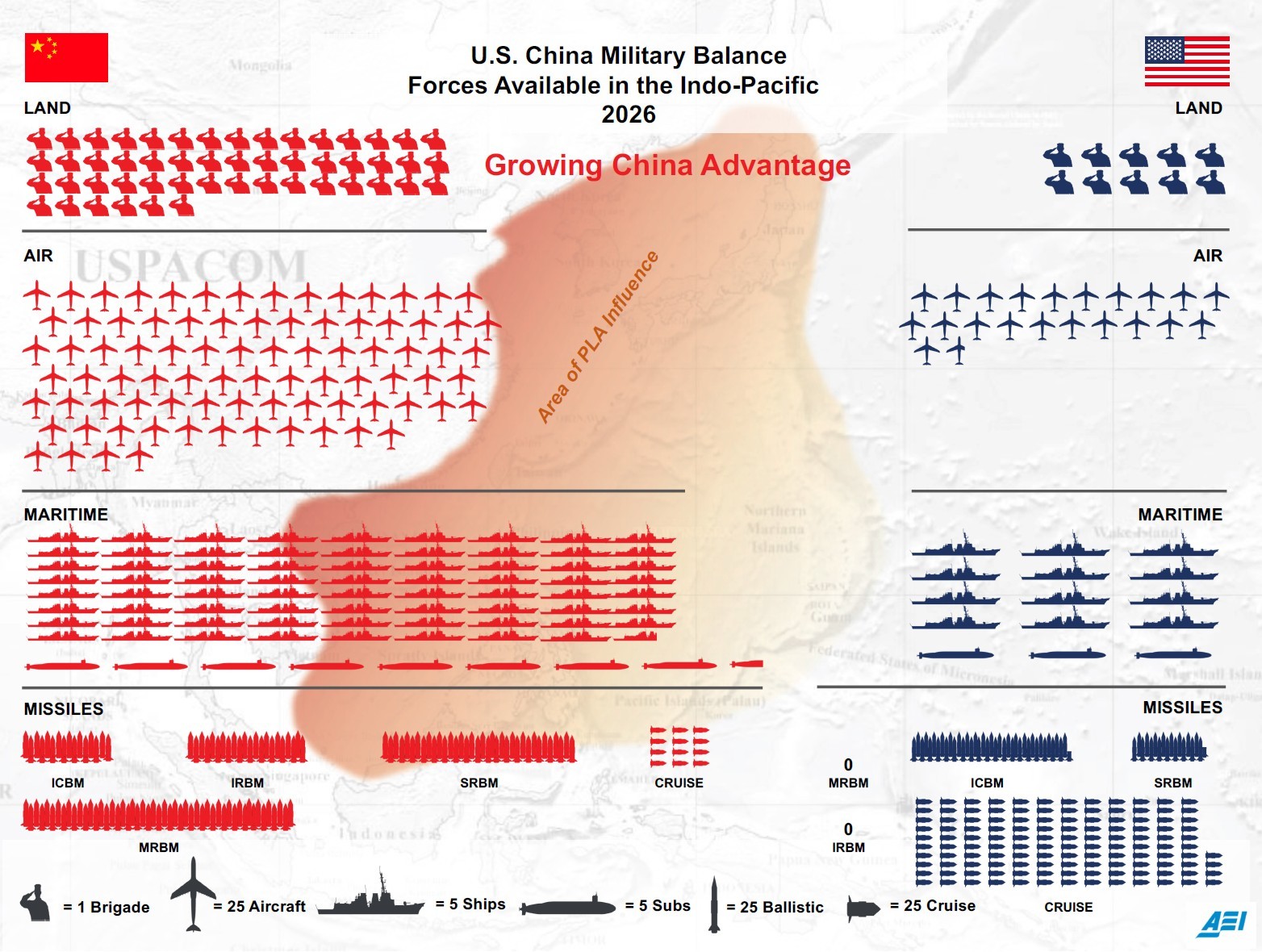
House Armed Services Committee Chairman Mike Rogers (R-AL) delivered the following opening statement at a hearing on the Department of Defense FY27 Budget Request, emphasizing the need to fund President Trump's $1.5 trillion budget request. Chairman Rogers' Statement as Prepared for Delivery:I welcome our witnesses and thank them for their service to our nation. We are meeting today to review the Pentagon’s FY27 budget request. Each year the budget presentation gives us an opportunity to take a hard look at the threats we face and our ability to deter and defeat them. It helps us decide on a level of investment that will actually secure our homeland and protect our interests across the globe. Here are the facts that underlie this budget request: We are confronting an unprecedented global threat environment with multiple adversaries working together to undermine our security and that of our allies. They are building alliances and supporting each other with drones, munitions, missile technology, and energy supplies. China is leading the charge against us. As you can see from this graphic, 25 years ago, the PLA was a defensive force with little ability to project power beyond their borders.
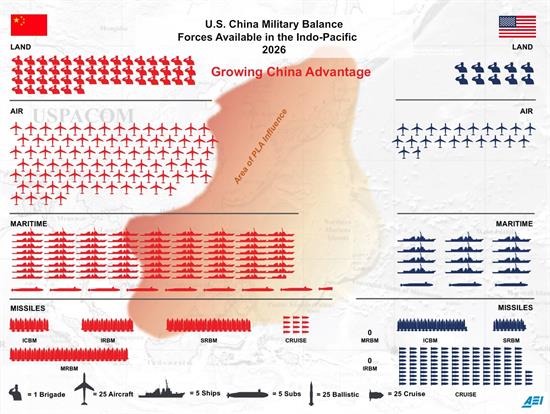
Today, the PLA is a modernized military force capable of projecting power well into the Pacific.
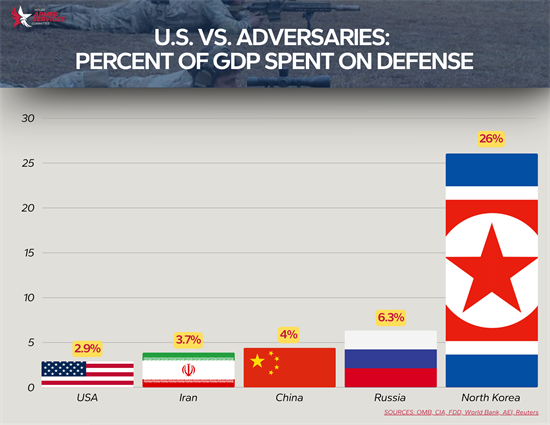
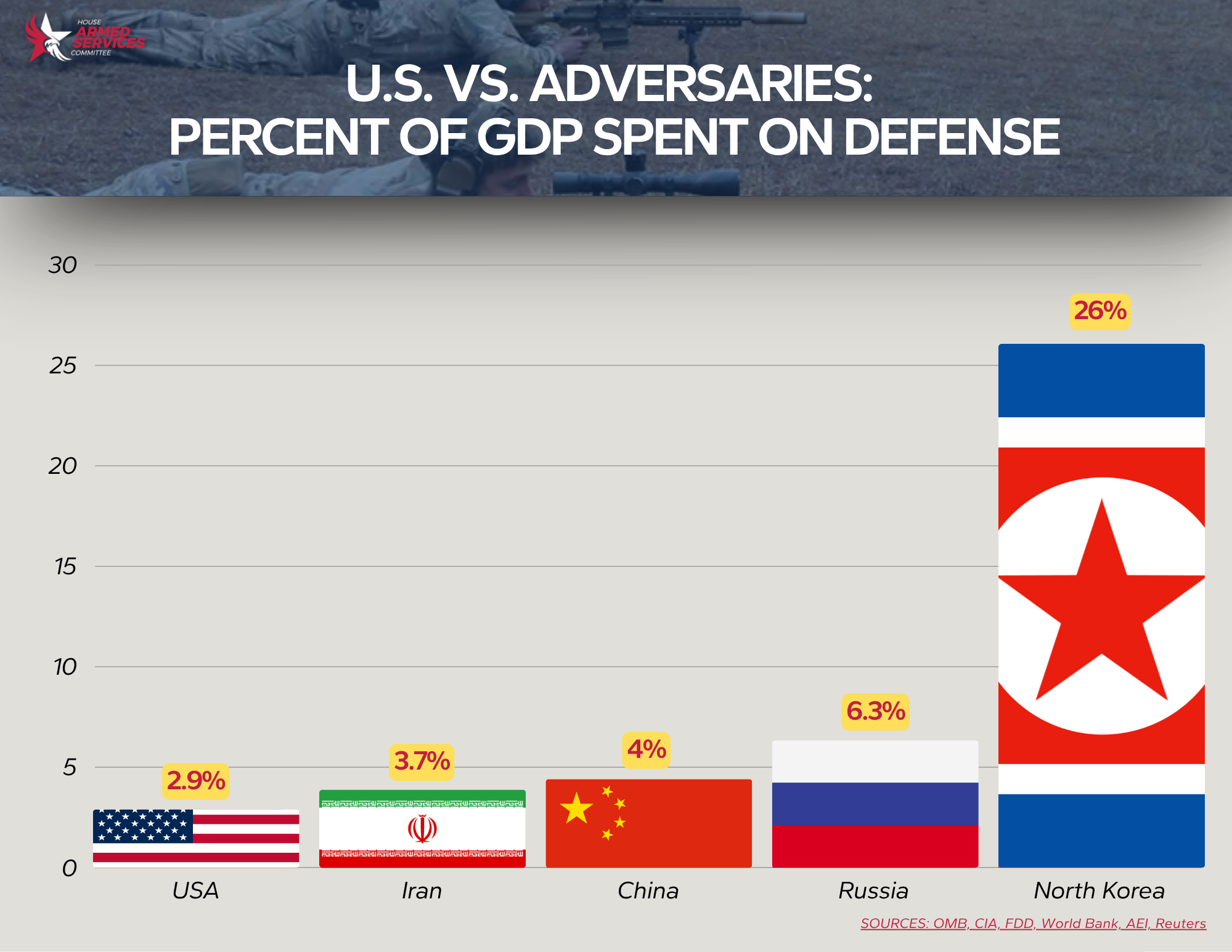
Their rapid military buildup has delivered thousands of new ships, subs, missiles, and space assets that that severely challenge our ability to safeguard our national security interests in the Indo-Pacific. China continues to invest heavily in the PLA’s military modernization, announcing another 7 percent increase in defense spending for this year. As a result, they are spending more of their GDP on defense than we are. In fact, as you can see from this graphic, all of our adversaries are spending more of their GDP on defense than we are.
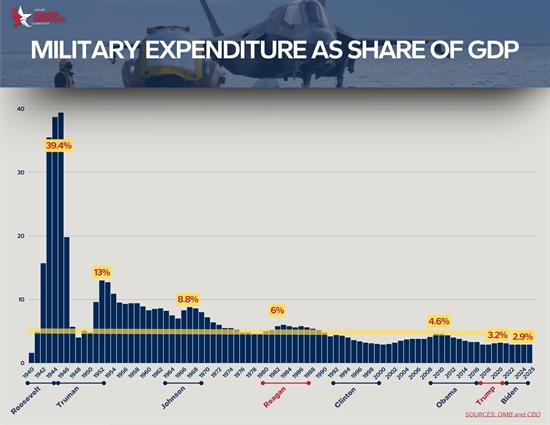
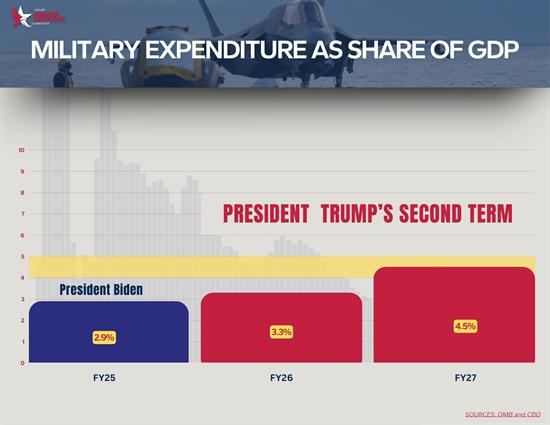
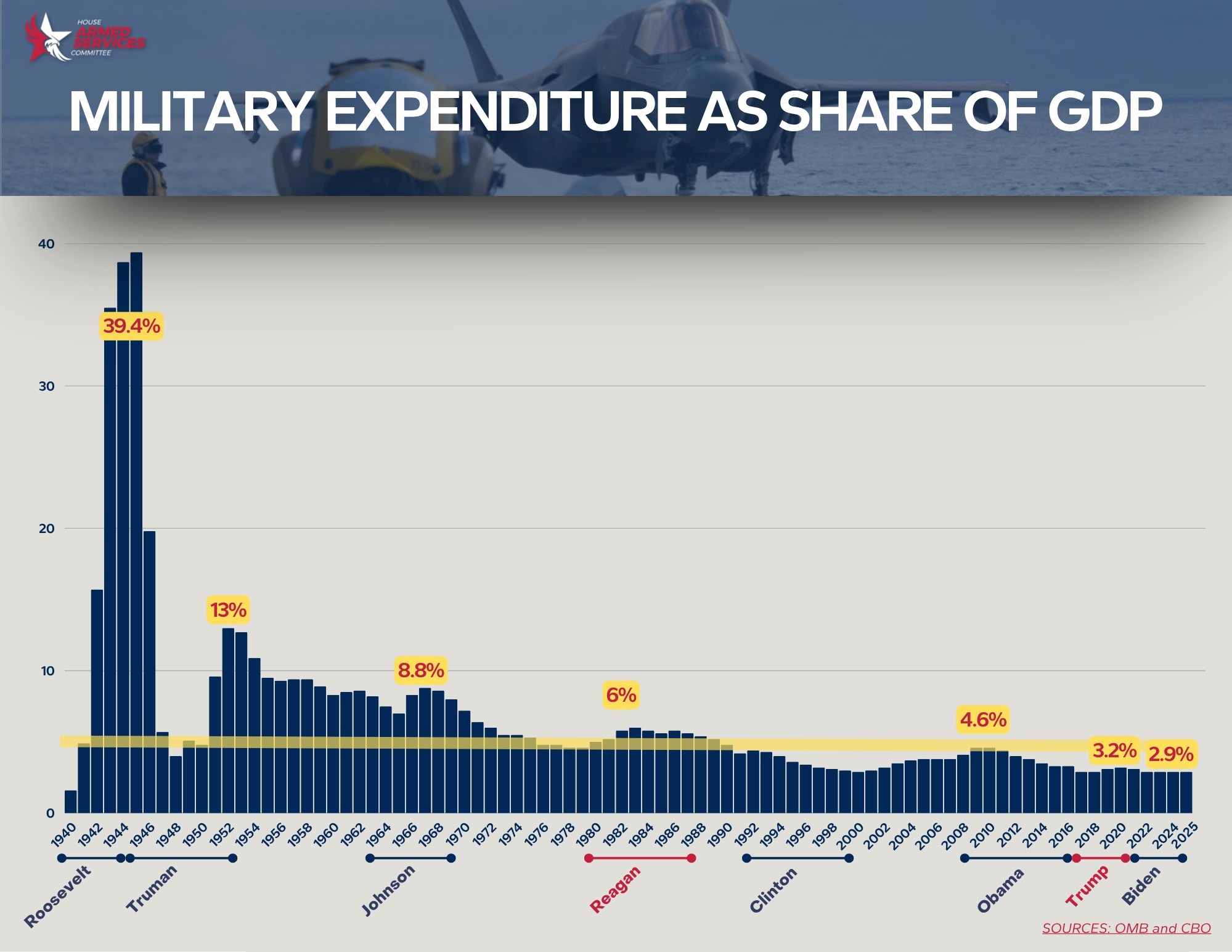
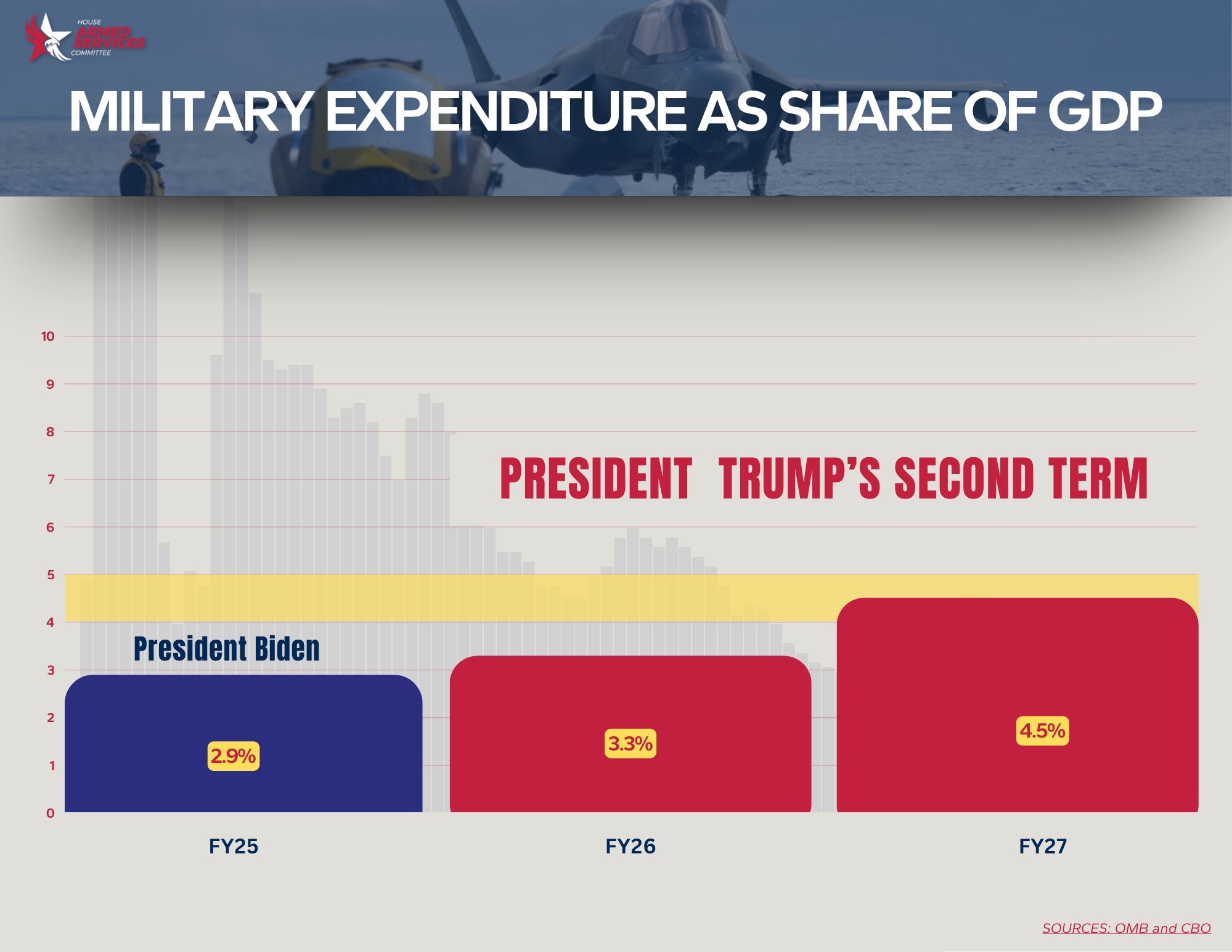
Meanwhile, our defense spending as a percentage of GDP has steadily fallen since World War II.
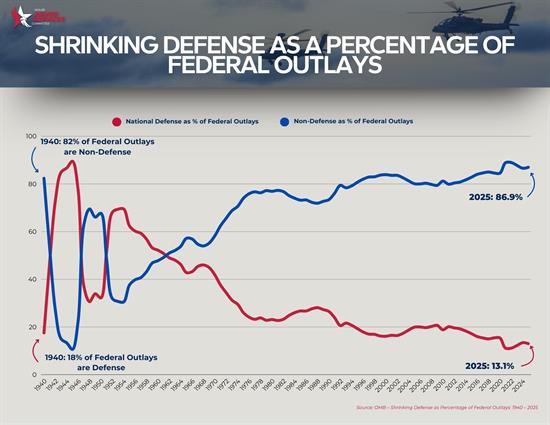
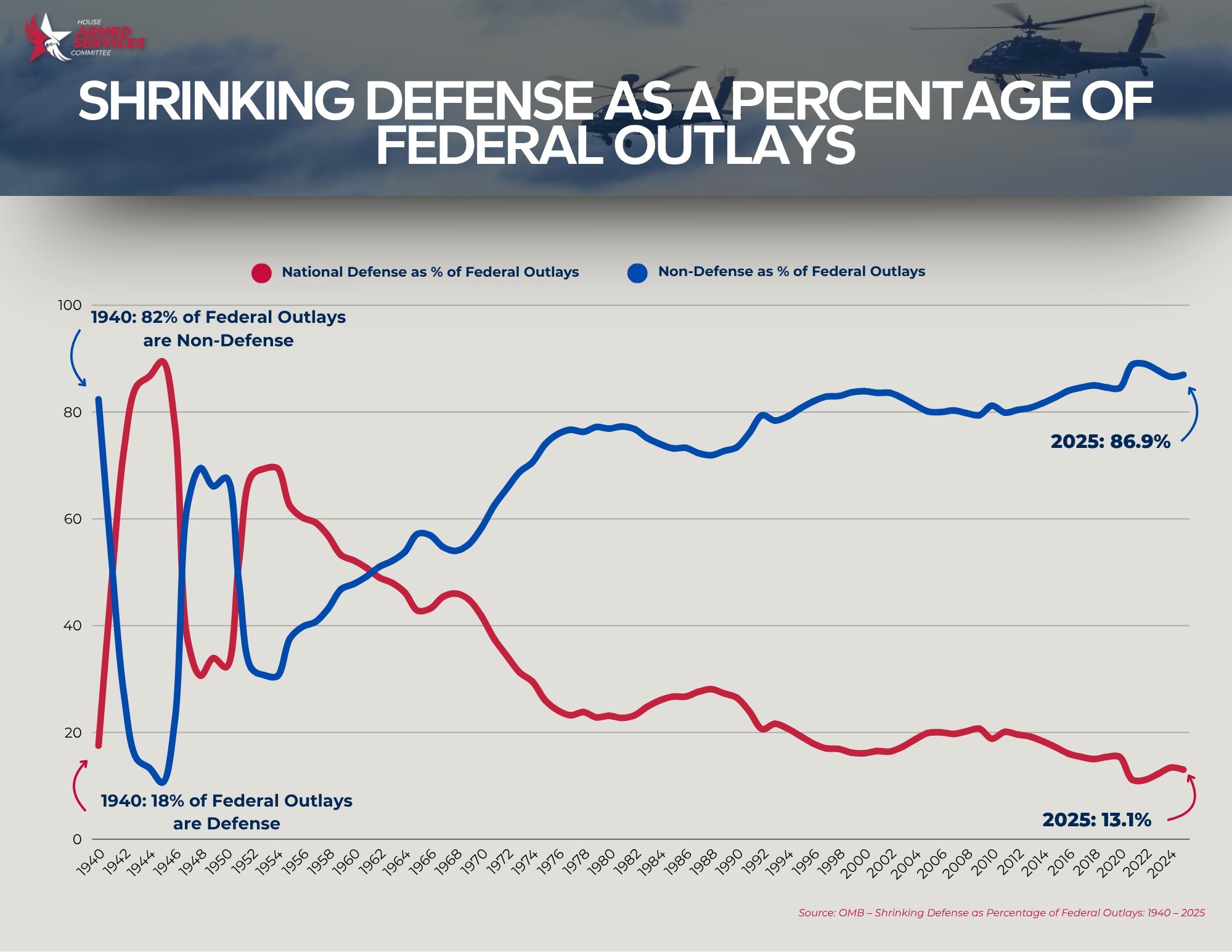
That yellow line cutting across the bars represents from 4 to 5 percent of GDP. History has shown that meeting or exceeding that level of investment ensures we can truly deter our adversaries. That’s also the level of investment we are asking our allies to make. But for years, we have chosen not to do the same. Since World War II, defense funding has shrunk significantly as a percentage of federal outlays.
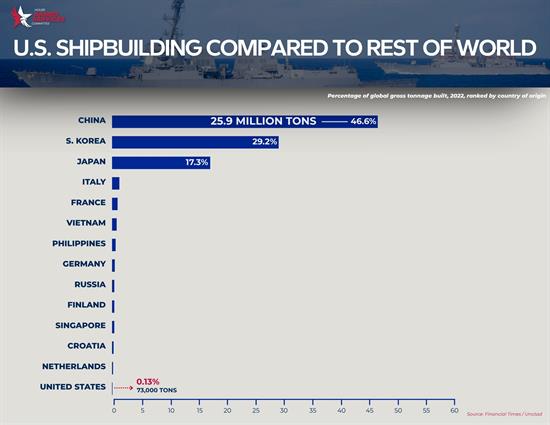
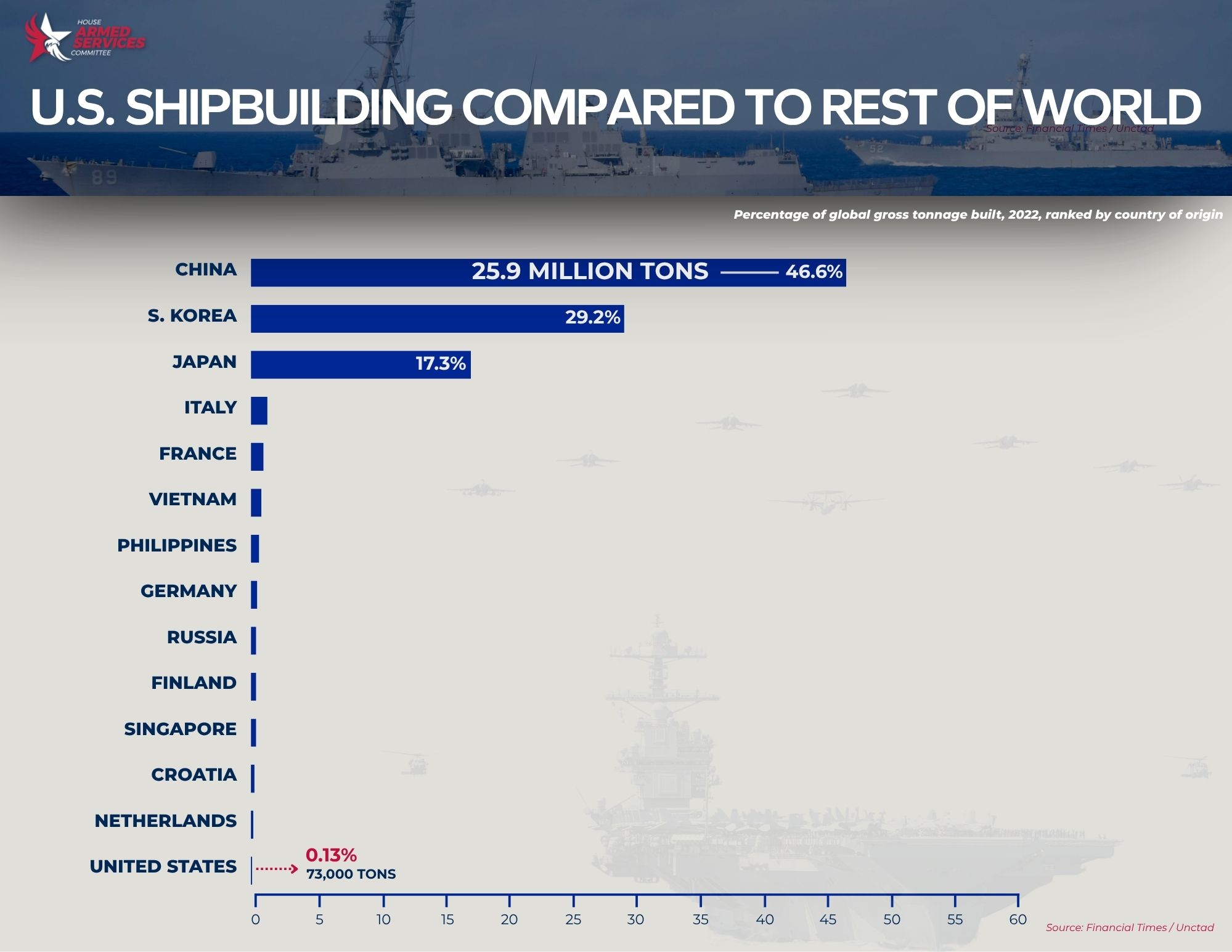
Defense spending now accounts for 13 percent of all federal spending. Nondefense spending accounts for over 85 percent. This underinvestment in our defense has had very real consequences. Our Defense Industrial Base, long the envy of the world, has atrophied significantly. We are no longer capable of manufacturing for our warfighters at scale or speed. Just look at shipbuilding. China builds 47 percent of the world’s ships. The U.S. builds one tenth of one percent. We build fewer ships than Croatia and the Netherlands.
Our global munitions stockpiles are low and we lack the capacity to rapidly restock magazine depth. We have very little industrial capacity to mine, refine, or process critical minerals. As a result, many of our defense supply chains are reliant on the very adversaries we seek to deter. Beyond the impact on our industrial base, inadequate investment in our defense has resulted in a vicious cycle that has pitted sustainment against modernization. For years, administration after administration has come before us with budgets asking us to decommission weapon systems they admit we still need. Or to cut funding for training, parts, and supplies. Or to put off needed maintenance to the facilities where our servicemembers live and work. Or to reduce the number of military personnel. These budgets have asked us to make these sacrifices and accept the near-term risk so we could afford to reinvest in military modernization - which is something we also desperately needed to do. But we in Congress consistently rejected that mutually exclusive choice. Instead, we divided up the limited budget we were given and made a worse choice. We underfunded both sustainment and modernization. The result is that we don’t have nearly enough munitions, ships, aircraft, or autonomous systems to ensure dominance against every adversary. And the ships and aircraft we do have suffer from unacceptably low mission capable rates. Fortunately, that’s about to change. The President has requested a historic $1.5 trillion budget for our national defense. For the first time in 40 years, we’ve been presented a budget that accounts for the true cost of American deterrence. This budget fully funds both sustainment and modernization. It provides a 24 percent increase in operation and maintenance, including a 20 percent increase for core readiness programs, like flight hours and combat exercises. It includes a 115 percent increase in funding to repair and improve facilities for our servicemembers and their families. It increases military end strength by 44,000 and provides for a historic pay raise for our servicemembers. It calls for an unprecedented 76 percent increase in procurement and a 64 percent increase in research and development. This will enable us to truly catch up in our modernization efforts by quickly fielding new munitions, aircraft, ships, land, space, and autonomous systems to replenish and expand our arsenal. It directly confronts the challenges in our defense industrial base with over $100 billion in investments to revitalize manufacturing, expand domestic and allied critical minerals projects, and secure our supply chains. Finally, this level of investment gets defense spending back to 4.5 percent of GDP.
I would just note that it is critical we do not reduce deterrence as our allies ramp up their own capability. That is something we are paying close attention to on this committee. Before I close my remarks, I want to highlight the bravery, dedication, and professionalism of our warfighters throughout the conflict with Iran. Their tremendous work to achieve the very clear military objectives of this operation has given the President the opening he needs to negotiate a true and lasting peace that will ensure Iran never acquires a nuclear weapon. Mr. Secretary, General Caine, thank you for being here. I look forward to hearing how this budget request will ensure our military can preserve American deterrence for generations to come. |